Mumbai
Getting Around
- Local trains are the city’s bloodstream and an experience in themselves. Rules of engagement: buy a ticket (or the UTS app), travel outside rush hours (avoid 8–11 am toward south, 5–9 pm toward north), and consider First Class (still cheap, 4× the second-class fare, noticeably less compressed). Women: the ladies compartments are a calm parallel universe and locals will actively wave you into the right door. Doors stay open!! stand back from them and enjoy the breeze like everyone else.
- m-Indicator (app) is the local-train oracle - platforms, timings, everything.
- Metro: the newer underground Line 3 (Aqua Line) finally connects South Mumbai upward. Good for Colaba to Bandra-ish hops without traffic roulette.
- Kaali-peeli taxis (black-and-yellow Fiats): metered, charming, no AC. Some might try to negotiate a price with you, usually standing firm on wanting a meter works.
- Uber/Ola: work everywhere; Uber also offers autos (rickshaws) north of Bandra. Note: autos don’t operate in South Mumbai (south of Bandra/Sion) so it’s taxis or metro there.
- Ferries: the Gateway of India jetty runs boats to Elephanta and (RoRo car ferry) to Alibaug/Mandwa.
Crossing the street
South Mumbai tends to be walkable, but in general crossing the street can be an experience in India. The main thing, don’t panic and don’t go backwards - The traffic expects you to move forward to the other side and they will route around you. Just confidently walk through the gaps, stick your hand out to indicate them to stop if you want. It feels wrong for like a day or two, but it sort of works. Just don’t panic and run!
The Classics (do them, but strategically)
South Mumbai’s greatest hits sit within walking distance of each other: Fort → Kala Ghoda → Colaba → Gateway of India, then west to Marine Drive for sunset. A friend who grew up here insists that’s the entire itinerary - one day, one area, on foot, with stops for shops, cafés, galleries and a long lunch. Do that rather than pinballing across the city.
- Gateway of India: go at 7 am. You’ll share it with pigeons and joggers instead of ten thousand selfie sticks.
Dinner at one of the restaurants around the jetty is a nice way to end the day; the Taj Mahal Palace (Not the Taj Mahal you’re thinking of) across the road is excellent and expensive, and its afternoon tea is the popular way to see the inside without committing to a full meal. - CSMT station (Victoria Terminus): admire from outside, then actually go inside - it’s a working station and UNESCO site at once.
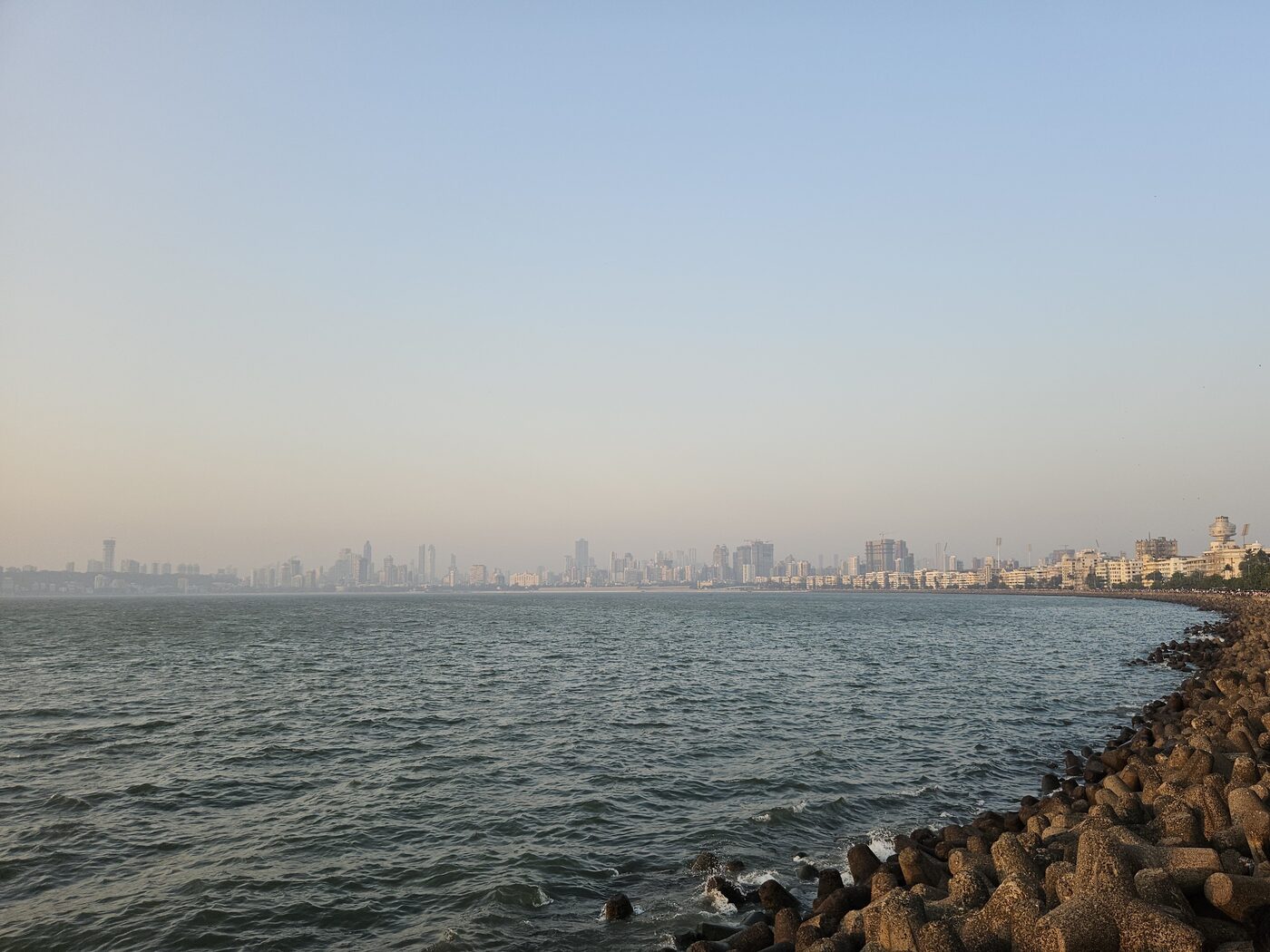
- Marine Drive / Nariman Point: the same seafront sweep, sunset with the crowd or 6 am with the walkers. Don’t bother in the middle of the day when it’s hot. If you want a nice running spot, this is it (when its not hot!).
- Dhobi Ghat, Hanging Gardens etc.: They’re all nice to visit, but don’t plan a full day around just this.
- CSMVS Museum (Prince of Wales Museum): genuinely world-class, great AC break, 2 hours well spent.
- Jehangir Art Gallery (Kala Ghoda): free, small, immediately next to CSMVS, and worth twenty minutes on the way past.
- Dharavi/Slum tours: I personally avoid them since I don’t want to fetishize the life of people who live in different conditions than me. The Mumbaikars I asked were also split on whether it belongs on a visitor’s list at all. But tours can be a good source of income for the locals if done right, if you do decide to partake - please do so with the respect of going into someones home and realize that they live nuanced and full lives that can’t be captured in film or books. There are tours that reframe Dharavi from “slum” to what it is: a hyper-productive recycling-, leather- and pottery-economy. Skip any operator that markets it as poverty sightseeing.
Off the Beaten Path
- Banganga Tank (Walkeshwar): an ancient temple tank hidden inside Malabar Hill’s high-rise forest. Ghats, ducks, temple bells, almost no tourists.
- Khotachiwadi (Girgaon): a tiny heritage village of pastel Portuguese-era wooden houses swallowed by the city. Ten minutes of lanes, a century of atmosphere. People live here, so please be respectful of that.
- Sassoon Docks (Colaba) at dawn: the fish market in full swing at 5:30–7 am is one of the great Mumbai spectacles - Koli women, mountains of ice, permanent street-art installations on the warehouse walls. Intense smells, incredible photos. Go early or don’t go.
- Worli Koliwada: the original fishing village that predates the city, at the foot of the Sea Link. Walk out to Worli Fort for the best free view of the bridge. This is Mumbai’s oldest community.
- Dadar Phool Galli (flower market), sunrise: wholesale flower market under the Dadar station bridge. Marigolds by the tonne. Pairs perfectly with a South Indian breakfast in Matunga.
- Global Vipassana Pagoda (Gorai): a golden pagoda with one of the world’s largest unsupported stone domes, reached by a short ferry from Gorai jetty. The ferry + pagoda + Gorai beach makes an oddly serene half-day far from any tourist trail.
- Chor Bazaar & Bhuleshwar: the “thieves’ market” — antiques, Bollywood posters, gramophones, car parts, and everything between. Bargain with a smile, expect to pay a third to half of the opening price, and treat it as theater. Nearby Bhuleshwar’s temple lanes and the Madhav Baug area are old Mumbai at full density.
- Kala Ghoda beyond the cafés: duck into the Keneseth Eliyahoo Synagogue (sky-blue, beautifully restored), gallery-hop (Jehangir, Chemould, Project 88).
- Dr. Bhau Daji Lad Museum (Byculla): the city’s oldest museum - a restored Victorian hall full of industrial-era models, maps and crafts of Bombay itself. Small, lovely, and usually empty. The zoo is next door.
- Sanjay Gandhi National Park (Borivali): an actual forest inside the city limits, leopards included, with the ancient rock-cut Kanheri Caves in the middle of it. Manage expectations: if you’ve hiked national parks elsewhere, this is not that. Go for the caves and the novelty of jungle at the end of a train line, don’t expect too much.
Bandra & the suburbs
If you’d rather walk around than tick off monuments, Bandra is the other half of the city - suburban, café-heavy,
pleasantly full of itself.
- Hill Road: the shopping street. Small shops and street stalls, cheap, chaotic, fun.
- Carter Road: seafront promenade, best in the evening. This is the sunset walk locals actually do, and it’s lined with restaurants.
- Bandra–Worli Sea Link: worth crossing in a taxi purely for the drive. Pair it with Worli Fort above for the view from underneath.
- Autos run up here (they don’t in South Mumbai), so hopping between Bandra spots is easy and cheap.
Temples, mosques and churches
Shoes off, shoulders and knees covered, and leave leather bags out of temples where you can.
- Siddhivinayak (Prabhadevi): the city’s most beloved Ganesh temple and extremely crowded - Tuesdays are the worst of it. Go early, expect a queue, keep the phone in a safe spot.
- Haji Ali Dargah (Worli): a white marble shrine at the end of a causeway the sea swallows at high tide. Check the tide before you walk out.
- Mount Mary Basilica (Bandra): hilltop church with a view, and a genuinely mixed congregation of every faith in the city.
- Banganga above is the quiet alternative if crowds aren’t your thing.
Food & Drink
Disclaimer I’m vegetarian so my food preferences might vary from yours
Mumbai has a phenomenal food scene! Every state in India has its own language, culture and cuisine, and as a metropolitan city you’ll find all of it represented here - the cuisines themselves have their own chapter (Eating in India). What’s below is what Mumbai in particular is famous for.
Street food (choose a good place and don’t fear!)
- If a stall doesn’t look right to you, order the same dishes at a busy sit-down restaurant instead - you lose very little. Where you do eat on the street, the local heuristic is the longest queue: high turnover means it’s fresh and made in front of you.
Dishes to try:
- Vada pav (Indian burger with a potato patty) is the city’s soul, you shouldn’t leave Mumbai before trying one. A Mumbaikar’s instruction, near-verbatim: you MUST eat vada pav, street vada pav is the best, find the longest line and eat it fresh.
- Pav bhaji is a mixed vegetable strew with bread as a side, its a Portugese-Indian fusion dish that I absolutely love (Pav from portugest Pao)!
- Bhel puri / sev puri, puffed rice flakes mixed with spices and sauces
- Pani puri: puffed balls filled with sauces and potato, eat it as a whole and expect an explosion of flavor in your mouth once you bite in
Note: Don’t trust your instagram reel to show you how street food is made, I lived off of this stuff as a teenager and turned out (mostly) fine. Choose a good spot and sit back and enjoy it.
Irani cafés
Created by zoroastrian irani immigrants in the 19th century, they became a mainstay in Mumbai! There aren’t many of them left in Mumbai, so I’ll just list the places for ease.
- Kyani & Co. (Marine Lines): 120 years old, bun maska + chai under slow fans.
- Britannia & Co. (Ballard Estate): Parsi institution - vegetarians get the veg berry pulao; the sali boti is for your omnivore friends.
- Yazdani Bakery (Fort)
Sit-down restaurants
Mostly local picks rather than mine, and note how many of them are in the Fort/Kala Ghoda/Colaba block - another reason to spend a whole day down there.
- O Pedro (BKC): Goan food and great vibes, and the only one here that’s walking distance from the Devcon venue.
- The Bombay Canteen (Lower Parel): the famous modern-Indian one. Book ahead.
- Gallops (Mahalaxmi): fantastic, overlooking the racecourse.
- Trishna (Kala Ghoda): iconic seafood, the butter-garlic crab is why people go. Omnivores only.
- Khyber (Kala Ghoda): Mughlai/north Indian in a beautiful room.
- Burma Burma (Fort): entirely vegetarian Burmese with no alcohol and a serious tea list. Very much my kind of place.
- Bademiya (Colaba, behind the Taj): a seekh kebab counter since 1946 and the classic late-night stop.
- The Pantry (Kala Ghoda): café food, good breakfast, calm room, useful AC.
- Leopold Café (Colaba): more institution than restaurant - on every tourist’s list, and one of the 26/11 attack sites.
- Britannia & Co. belongs on this list too - see the Irani cafés above.